With increasing pressure on regions and industries to deliver climate neutrality, reduce material dependency and strengthen resilience, structured approaches to industrial-urban symbiosis are becoming increasingly relevant.
The Hubs4Circularity Community of Practice has published two new guides addressing complementary dimensions of industrial-urban symbiosis (I-US): stakeholder engagement and societal impact.
Industrial-urban symbiosis presents a systems approach to improving resource efficiency by enabling one organisation to use under-utilised resources from another. However, successful implementation depends not only on technical feasibility but also on governance structures, stakeholder alignment and public acceptance.
Guide to stakeholder engagement
The Hubs4Circularity Guide to Stakeholder Engagement provides a structured approach to identifying and engaging key actors in the development of Hubs4Circularity.
The guide outlines:
- Stakeholder categories including industry, regulators, investors, trade associations and champions
- Motivations and benefits for each stakeholder group
- Strategic approaches to alignment and communication
- A case study on the development of a South African national industrial symbiosis programme
Who should read this guide?
Regional development agencies, industrial park operators, policy officers, facilitators and innovation managers working on circular economy ecosystems.

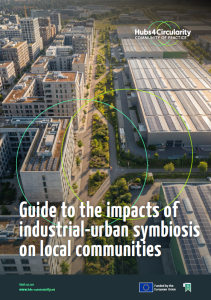
Guide to the impacts of industrial-urban symbiosis on local communities
The Hubs4Circularity Guide to the Impacts of Industrial-Urban Symbiosis on Local Communities explores environmental, economic and social benefits generated at territorial level.
The guide features:
- Citizen engagement experience from Skive (Denmark)
- Demonstrator projects including SYMSITES, Waterproof and ASHCYCLE
- Environmental, economic and social impact pathways
Who should read this guide?
Municipalities, regional authorities, sustainability officers, community engagement practitioners and policy makers working on climate neutrality and circular transition.
Both guides are available via the H4C Knowledge Platform.